Evidence in Motion Continuing Education Courses South Dakota
| Registration |
|---|
| |
Target Audience
Physicians, Physician Assistants, Nurse Practitioners, Physical Therapists, Occupational Therapists
Purpose
Upon completion of this course, learners will have a working knowledge of this emerging treatment, can immediately implement PNE strategies in clinical care, and build a more comprehensive relationship with rehabilitation providers using PNE and PNE+ with patients experiencing pain.
Educational Need
With high rates of chronic pain and the opioid epidemic, various strategies are being explored to help patients with chronic pain. In the last 20 years, pain neuroscience education (PNE) emerged in rehabilitation as an evidence-based, clinically applicable approach to help people with chronic pain. PNE aims to teach patients more about the underlying biology and physiology of their pain experience, using metaphors, examples, and images. To date, a dozen meta-analyses and systematic reviews have shown strong evidence for PNE to positively influence pain ratings, disability scores, limited movement, fear-avoidance, pain catastrophization, and healthcare utilization.
Additionally, when PNE is combined with behavioral and movement-based treatments (PNE+), it yields even superior results. PNE literature is now becoming commonplace in medical journals, and it is proposed that ideally, all healthcare providers would collectively use PNE to provide evidence-based, multidisciplinary care for people with chronic pain. First, this lecture aims to update medical providers on the evolution and evidence of PNE, to allow for a working knowledge of this emerging treatment. Second, attendees will be taught ways to use and immediately implement PNE strategies in clinical care and build a more comprehensive relationship with rehabilitation providers using PNE and PNE+ with patients experiencing pain, especially chronic pain.
Objectives
- Recognize how pain neuroscience education emerged as a biopsychosocial approach in contrast to prevailing biomedical models.
- Develop an understanding of the current evidence for pain neuroscience education for various clinical conditions.
- Develop a working knowledge of pain neuroscience education as a medical provider in daily clinical practice.
- Enhance interdisciplinary approaches to pain management with rehabilitation professionals.
- Apply the presentation's information, content, and strategies to clinical practice.
Program
| 8:00 am | The Pain and opioid epidemic fueled by the biomedical model | |
| 8:30 am | The evolution and evidence of pain neuroscience education | |
| 9:00 am | Update on the neuroscience of pain | |
| 10:00 am | Break | |
| 10:15 am | Teaching patients about pain | |
| 11:15 am | Pain neuroscience education for medical providers | |
| 12:15 pm | Adjourn | |
Speaker
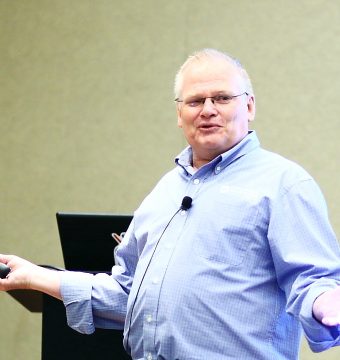
Adriaan Louw, PT, PhD
Dr. Lowe earned an undergraduate and a master's degree in physiotherapy from the University of Stellenbosch in Cape Town, South Africa. He is an adjunct faculty member at St. Ambrose University, South College, and the University of Nevada Las Vegas, teaching pain science. Dr. Lowe has taught throughout the US and internationally for 20 years at numerous national and international manual therapy, pain science, and medical conferences. He is a Certified Spinal Manual Therapist and Certified Pain Specialist and has authored and co-authored over 50 peer-reviewed articles related to spinal disorders and pain science. Dr. Lowe completed his Ph.D. in pain neuroscience education and is the Director of the Therapeutic Neuroscience Research Group – an independent collaborative initiative studying pain neuroscience. Adriaan is the Program Director of the Therapeutic Pain Specialist and Pain Science Fellowship post-graduate program for Evidence In Motion.
References
- Siddall B, Ram A, Jones MD, Booth J, Perriman D, Summers SJ. Short-term impact of combining pain neuroscience education with exercise for chronic musculoskeletal pain: a systematic review and meta-analysis. Pain. 2021.
- Romm MJ, Ahn S, Fiebert I, Cahalin LP. A Meta-Analysis of Therapeutic Pain Neuroscience Education, Using Dosage and Treatment Format as Moderator Variables. Pain Pract. 2021;21(3):366-380.
- Louw A, Sluka KA, Nijs J, Courtney CA, Zimney K. Revisiting the Provision of Pain Neuroscience Education: An Adjunct Intervention for Patients but a Primary Focus of Clinician Education. J Orthop Sports Phys Ther. 2021;51(2):57-59.
- Agarwal V, Louw A, Puentedura EJ. Physician-Delivered Pain Neuroscience Education for Opioid Tapering: A Case Report. Int J Environ Res Public Health. 2020;17(9).
- Wood L, Hendrick PA. A systematic review and meta-analysis of pain neuroscience education for chronic low back pain: Short-and long-term outcomes of pain and disability. Eur J Pain. 2019;23(2):234-249.
- Watson JA, Ryan CG, Cooper L, et al. Pain Neuroscience Education for Adults With Chronic Musculoskeletal Pain: A Mixed-Methods Systematic Review and Meta-Analysis. J Pain. 2019.
- Louw A, Vogsland R, Marth L, Marshall P, Cox T, Landers M. Interdisciplinary Pain Neuroscience Continuing Education in the Veterans Affairs. Clin J Pain. 2019;35(11).
- Louw A, Puentedura EJ, Reed J, Zimney K, Grimm D, Landers MR. A controlled clinical trial of preoperative pain neuroscience education for patients about to undergo total knee arthroplasty. Clin Rehabil. 2019:269215519857782.
- Malfliet A, Kregel J, Coppieters I, et al. Effect of Pain Neuroscience Education Combined With Cognition-Targeted Motor Control Training on Chronic Spinal Pain: A Randomized Clinical Trial. JAMA Neurol. 2018;75(7):808-817.
- Louw A, Zimney K, Puentedura EJ, Diener I. The Efficacy of Therapeutic Neuroscience Education on Musculoskeletal Pain – A Systematic Review of the Literature. Physiotherapy Theory and Practice. 2016;32(5):332-355.
- Louw A, Schmieder A, Peppin E, Farrell K, Zimney K, Maiers N. Can a pain neuroscience education lecture alter treatment choices for chronic pain in physician assistant students? Psychological Disorders and Research. 2020;3(2):1-5.
- Zimney K, Louw A, Johnson J, Peppers S, Farrell K. Effects of Pain Science Education on Physician Assistant Students Understanding of Pain and Attitudes and Beliefs about Pain. South Dakota Medical Journal. 2018(November):506-511.
Source: https://cme.dmu.edu/PNE-April-2022
0 Response to "Evidence in Motion Continuing Education Courses South Dakota"
Post a Comment